The Element of Line in Art Helps Create a Sense of Movement
The Elements of Art: Line
Class Level: ane-2
Students will be introduced to one of the basic elements of art—line—past analyzing types of lines used in various works of art to help students understand how artists use line to convey movement and mood. They will and then create an abstract line art piece based on an activity they enjoy to do or watch.

Frank Stella
American, built-in 1936
Jarama 2, 1982
mixed media on etched magnesium, 319.ix x 253.9 x 62.viii cm (125 xv/16 x 99 fifteen/16 x 24 3/4 in.)
National Gallery of Art, Souvenir of Lila Acheson Wallace
Curriculum Connections
- Performing Arts
Materials
- Smart Board or figurer with ability to project images from slideshow
- Variety of art media for students to choose from (suggestions: markers, watercolors, colored pencils, colored paper for collage, oil pastel, tempera paint, yarn, etc.)
- A long cardboard box
- Small-scale balls in a variety of sizes
Warm-up Questions
If this painting could move, would it motility quickly or slowly? Is there something nearly the lines that make you think and then?
Background
Line is a mark fabricated using a drawing tool or castor. There are many types of lines: thick, thin, horizontal, vertical, zigzag, diagonal, curly, curved, screw, etc. and are often very expressive. Lines are bones tools for artists—though some artists show their lines more than others. Some lines in paintings are invisible—you don't really see the nighttime marker of the line. But they are there, shown in the way the creative person arranges the objects in the painting.
Artist Frank Stella is a racing fan. This metal relief painting, Jarama Two, is named after an automobile racetrack exterior Madrid, Spain. Here, Stella used winding, curving strips of metal painted in bright, dynamic colors to forcefully carry the motion and excitement of professional racing.
Guided Practice
Lines in fine art express different things. View the slideshow below and have students reply the questions beneath each image:
Slideshow: Exploring Lines in Works of Art
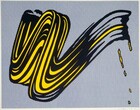

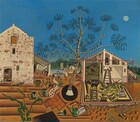
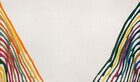

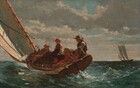

Activity
Students will select an activeness they relish watching or participating in that involves movement such as playing a sport, dancing, climbing a tree, biking, jumping rope, etc. They will list adjectives that describe both the activeness and feelings they have while doing or viewing this activeness. Then, students will write next to each adjective what type of line and color would reverberate this activity best. For example, watching a ballet may be soft, sparse, wavy lines in pastel colors, while jumping rope may be thick, zigzag lines in bold hues. Using Stella's Jarama II as their inspiration, students will create an abstract line art piece in a medium of their choice that evokes the feeling of their activity. Remind students that selection of media is very important; markers create a much bolder impression than watercolors then they should think nigh the whole picture they wish to depict.
To accommodate visual impairments, students tin can use yarn and gum to create their abstract line drawings. Students can draw with mucilage onto a piece of paper, and then lay unlike types and lengths of yarn to create a raised surface drawing.
An alternative to accommodate motor command differences would be to create an abstract line drawing using a box, assurance, and tempera paint. Students would place a piece of paper inside a long box, and squeeze iii-iv quarter-size amounts of tempera paint in different colors onto the newspaper. Students would then utilise assurance of varying sizes and roll the balls through the paint, trying different speeds, to create lines.
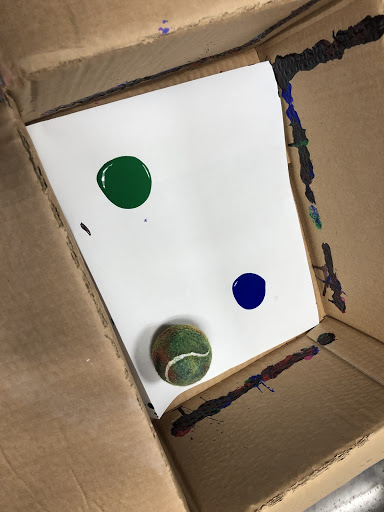
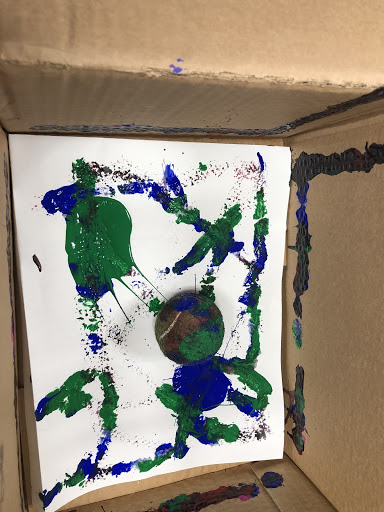
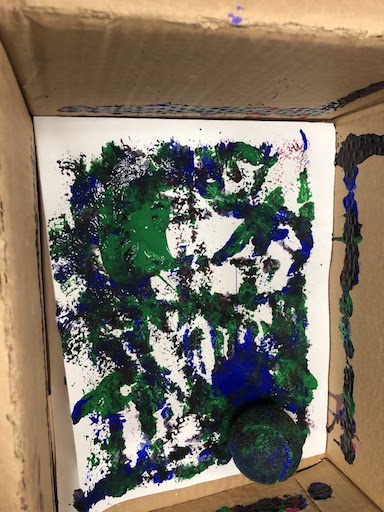
Place a piece of newspaper inside a box, and put 3-4 quarter-size amounts of tempera paint in different colors on the paper.
Extension
Students will then post their finished works of fine art for class discussion. Beginning, their fellow classmates should guess what activity is being depicted and give their reasons for their answer: What is it about the shape of the line? the thickness? the number of lines included? the color? selection of media? Then the student artist volition justify their decisions to the class.
The Elements of Art is supported by the Robert Lehman Foundation
National Core Arts Standards
VA:Cr1.1.2 Brainstorm collaboratively multiple approaches to an fine art or design problem.
VA:Cr1.2.2 Make art or design with various materials and tools to explore personal interests, questions, and curiosity.
VA:Cr2.1.2 Experiment with diverse materials and tools to explore personal interests in a piece of work of art or design.
VA:Cr2.2.1 Demonstrate safe and proper procedures for using materials, tools, and equipment while making fine art.
VA:Cr3.ane.2 Discuss and reflect with peers about choices fabricated in creating artwork.
VA:Re7.2.two Perceive and draw aesthetic characteristics of one'south natural world and constructed environments.
VA:Re8.i.2 Translate art by identifying the mood suggested by a work of fine art and describing relevant subject matter and characteristics of grade.
Source: https://www.nga.gov/learn/teachers/lessons-activities/elements-of-art/line.html

إرسال تعليق for "The Element of Line in Art Helps Create a Sense of Movement"